Current Issue

2026 Vol. 42, No. 1

Party Construction, Ideology and Politics
The Adherence and Development of Xi Jinping Thought on Ecological Civilization to Marxist Political Economy
LI Quanxi, CAO Yidi
2026, 42(1): 1-9. doi: 10.19979/j.cnki.issn10082689.2025070013
Abstract(15) HTML (11) PDF(1)
Abstract:
Ecological environment issues are fundamentally rooted in the model of economic development. Through the methods of literature research and comparative analysis, this study delves deeply into the Marxist political economy implications of Xi Jinping thought on ecological civilization. The research argues that Xi Jinping thought on ecological civilization by advancing the notion of “harmony between humanity and nature” enriches Marxist views on the relationship between humans and nature; the proposition that “lucid waters and lush mountains are invaluable assets” expands upon Marxist labor theory of value; the assertion that “a good ecological environment is the fairest public product and the most inclusive welfare for the people” advances the Marxist theory of fairness and justice; the proposal that “we must protect the ecological environment with the strictest institutions, regulations and laws” enriches the theory of basic socialist economic systems; and the proposal of “jointly promote global ecological civilization construction” deepens the theory of economic globalization.
The Value Implication, Inherent Logic, and Practical Path of Universities’ Integrated Advancement of “Three Non-Corruptions” in the Context of Building a Leading Country in Education
ZHANG Dalin, JIANG Lingbin
2026, 42(1): 10-16. doi: 10.19979/j.cnki.issn10082689.2025070126
Abstract(11) HTML (11) PDF(1)
Abstract:
In higher education institutions, the integrated advancement of “not daring to be corrupt, not being able to be corrupt, and not wanting to be corrupt” (hereinafter referred to as “Three Non-Corruptions”) is an inevitable choice for deepening the full and strict governance over the Party, a potent measure for modernizing the educational governance system and capacity, an intrinsic requirement for fulfilling the fundamental mission of fostering virtue and cultivating talent, as well as a strategic support for creating an innovation ecosystem characterized by integrity and clarity. This approach bears profound significance for higher education institutions in discharging their duty to educate students for the Party and nurture talents for the nation. The “Three Non-Corruptions” mechanism emphasizes the synergistic effect of punishment and deterrence, institutional constraints, and educational guidance, facilitating a profound transformation from external constraints to internal consciousness, thereby achieving dynamic coordination between suppression and prevention. Within the context of building a leading country in education, higher education institutions can advance the construction of “Three Non-Corruptions” mechanism through refining the accountability system, enhancing collaborative mechanisms, effectively leveraging practical platforms, elevating comprehensive efficacy, and fostering a wholesome institutional atmosphere. These efforts will further promote in-depth advancements in Party conduct, clean governance, and the fight against corruption, thereby laying a solid foundation for high-quality development in higher education institutions and contributing to the national endeavor of strengthening the country and achieving the great rejuvenation of the Chinese nation.
Theoretical and Practical Exploration of Political Supervision in Universities under the Background of Building a Leading Country in Education
SONG Jihong, WANG Zhixin, LI Jianwei
2026, 42(1): 17-23. doi: 10.19979/j.cnki.issn10082689.2025080094
Abstract(21) HTML (7) PDF(5)
Abstract:
Political supervision is an important guarantee for realizing the Party’s political line and a powerful measure to urge the whole Party to adhere to the centralized and unified leadership of the Party Central Committee. Effective political supervision in universities is an inevitable requirement for universities to implement the Party’s education policy and the fundamental task of fostering virtue and cultivating talent. In the context of building a leading country in education, universities need to have a deeper understanding of the history and theoretical logic of political supervision in higher education, identify the difficulties and challenges faced by political supervision in universities, and explore effective supervision practices. On the basis of theoretical and systematic analysis of political supervision, and combined with the actual situation of universities to actively explore effective practical paths for political supervision, this study aims to provide reference for continuously promoting the concretization, precision, normalization of political supervision in universities, and improve their governance capacity.
Analysis of the Practical Approaches to Integrating the Founding Spirit of the Party into Online Ideological and Political Education for College Students
JIA Zhaoshuai
2026, 42(1): 24-30. doi: 10.19979/j.cnki.issn10082689.2025060048
Abstract(20) HTML (10) PDF(1)
Abstract:
From practice to practice. The founding spirit of the Party originated from the great practice of the Communist Party of China, and it needs to return to the soil of practice to guide new practices. The integration of the founding spirit of the Party into online ideological and political education for college students has profound contemporary value and practical significance, and its essence is the creative transformation of the red gene in the digital age. It is necessary to explore practical and effective practical paths. Based on the scientific connotation of the great founding spirit of the Party and the practical characteristics of online ideological and political education, a scientific path for integration of the founding spirit of the Party into the specific practice of online ideological and political education for college students can be constructed from the five dimensions: concretization, specialization, digitalization, three-dimensionality and demassification.
Higher Education Studies
Research on The Influence Mechanism of Short Video Algorithm Recommendation on the Shaping of College Students’ Values
ZHOU Ye, ZHANG Yuhan
2026, 42(1): 31-38. doi: 10.19979/j.cnki.issn10082689.2025060124
Abstract(8) HTML (5) PDF(0)
Abstract:
In the age of intelligent media, short video algorithm recommendation technology has deeply permeated college students’ lives and has exerted a significant impact on the shaping of their values. Based on the threefold attributes of algorithm recommendation—technical logic, ideology, and social impact—this paper analyzes its positive effects in promoting precise cultivation of cognition, knowledge popularization, and the forging of value consensus. It also reveals the risks of value shaping brought about by the information cocoon, the impact of capital logic, and algorithmic bias. Furthermore, it proposes optimization strategies from the dimensions of mechanism construction, systematic layout, and algorithmic innovation, providing new perspectives and practical approaches to addressing the challenges of guiding college students' values in the algorithm era.
Research on the Construction of International Communication Capacity in Higher Education in the Background of Building China into a Leading Country in Education
LI Bei
2026, 42(1): 39-45. doi: 10.19979/j.cnki.issn10082689.2025060098
Abstract(13) HTML (4) PDF(0)
Abstract:
As strategic highlands of education, science and technology, and talent resources, universities play a significant part in building China into a leading country in education. The international communication capacity of universities serves as a crucial fulcrum and core component for enhancing national soft power, international influence, and discourse power, directly shaping the country’s international image. Therefore, strengthening the communication capacity carries great practical significance. This paper explores the value implications of building the international communication capacity of universities. And analyzes the challenges and core elements of international communication capacity of universities from the dual perspectives of higher education internationalization and communication studies. Furthermore, it proposes a practical path focusing on “enhancing internal core competitiveness” and “strengthening external international communication power”, aiming to provide references for strengthening international communication capacity and building a more effective international communication system.
The Dual Policy Objectives of National Student Loans: Fiscal and Social Policy Goals
JI Xiaohui, LI Hang, WU Han
2026, 42(1): 46-57. doi: 10.19979/j.cnki.issn10082689.2024090138
Abstract(9) HTML (7) PDF(1)
Abstract:
How to adapt the national student loans to the needs of economically disadvantaged students in the popularization stage of higher education is a major issue related to the construction of a powerful country in higher education. The purpose of student loans is to achieve two interrelated but contradictory policy goals: One is the financial policy goal of cost sharing of higher education, and the other is the social policy goal of ensuring the equity of higher education. Based on the in-depth analysis of the policy adjustment of the national student loan in different stages of higher education development, such as the funding object, loan interest rate, financial subsidies, combined with the relevant statistical data, this paper believes that the national student loan policy achieves the dual goals of education equity and cost sharing through dynamic adjustment, but the tension between the policy objectives of education equity and cost sharing is prominent under the background of the construction of a powerful country in higher education. This paper suggests that the national student loan policy should be further improved during the period of building a powerful country in higher education. The specific strategies include: Adhering to the value orientation of higher education equity, and cooperating with general commercial student loans to improve the cost sharing mechanism of education; reasonably setting the upper limit of the total amount of national student loans available to students, and improving the preventive measures for loan repayment to reduce the default rate; optimizing the allocation of financial subsidies to improve the efficiency of financial subsidies for national student loans; broadening the scope of application of loan compensation, and exploring the loan repayment mechanism linked to employment. These measures are aimed at finding the best balance between the cost sharing of the national student loan policy and the goal of educational equity, and ensuring the human capital demand for the construction of a modern socialist power.
Exploring Pathways for High-Quality Development of International Student Education in Capital Universities under the Background of Internationalization
LI Baoming
2026, 42(1): 58-65. doi: 10.19979/j.cnki.issn10082689.2025060013
Abstract(10) HTML (4) PDF(1)
Abstract:
Against the backdrop of unprecedented global transformation in a century, international student education in China can leverage its unique strengths to contribute to the community with a shared future for mankind. As the vanguard of Chinese higher education institutions, universities in the capital face challenges that restrict their high-quality development in terms of student source structure, faculty and curriculum construction, and management and service levels, in the context of the rapid growth of the number of international students in China, the continuous improvement of the quality of education, and the continuous enhancement of the level of educational opening up to the outside world. It is imperative to explore innovative approaches, such as fostering a “deep interaction + identification” cultural integration model to cultivate international students' understanding and friendship toward China, develop a discipline system with “capital characteristics + demand” to create distinctive international student education programs tailored to regional universities. Comprehensively enhance “standard elevation + quality” in the cultivation process to improve the quality of international student education, and optimize the “standardized management + collaboration” system for international student management and service to elevate the standards of management and service, thereby promoting the high-quality development of international student education in capital universities.
The Theory and Path of Graduate Education in Industry Characteristic Universities in the New Era from the Perspective of “Great Aesthetic Education”
LI Haocan
2026, 42(1): 66-73. doi: 10.19979/j.cnki.issn10082689.2024070009
Abstract(17) HTML (7) PDF(3)
Abstract:
The concept of “great aesthetic education” is a breakthrough in the boundaries of traditional aesthetic education, permeating throughout education at all times and places. Empowering industry characteristic graduate education with the concept of “great aesthetic education” in the new era is of great value in achieving the goal of integrating science education and humanities education, leading the interdisciplinary and collaborative development of industry characteristic universities, and enhancing the ability and level of industry characteristic graduate students to serve society. However, there are still practical problems in the current industry characteristic graduate education in terms of nurturing students through aesthetics, such as weak positioning, insufficient depth of resources, inadequate breadth of platforms, and unclear teacher abilities. Therefore, based on the new concept of “great aesthetic education”, industry characteristic universities should lead graduate education through “top-level aesthetics”, “curriculum aesthetics”, “practice aesthetics”, and “teacher aesthetics”, in order to achieve the connotation and high-quality development of graduate education in industry characteristic universities in the new era.
Law
The Criminal Law Effect and Legal Interest Scope of the Right of Self-Determination on the Victim’s Acceptance of Risk
SHU Dengwei
2026, 42(1): 74-84. doi: 10.19979/j.cnki.issn10082689.2025050030
Abstract(12) HTML (6) PDF(1)
Abstract:
In cases of the victim’s acceptance of risk, the illegality of the perpetrator cannot be directly ruled out solely based on the victim’s right to self-determination, this is because in such circumstances, the victim only agrees to the dangerous behavior, and the complete exclusion of the perpetrator’s illegal self-determination right requires the complete abandonment of legal interest. Considering that the actor’s participation is conducive to the realization of the victim’s right to self-determination to some extent, in principle, the actor’s liability should be reduced within the limit of the victim’s consent to the execution of the dangerous behavior. Since the victim voluntarily puts their legal interest at danger, the scope of the legal interest should also be determined based on the basic principle of self-determination. Regarding physical legal interests, standards such as major bodily harm should not be used to restrict victims from taking risks; regarding legal interests of life, the function of victim’s acceptance of risk cannot be completely denied by involving legal interests of life; and regarding supra-individual legal interests, the restrictions on supra-individual legal interests in the victim’s consent should be continued, that is, the victim does not have the authority to dispose of legal interests other than their own.
Predictive Evidence in Criminal Proceedings: Attributes, Risks, and Applicable Rules
YE Xiangyu
2026, 42(1): 85-96. doi: 10.19979/j.cnki.issn10082689.2025020050
Abstract(13) HTML (11) PDF(1)
Abstract:
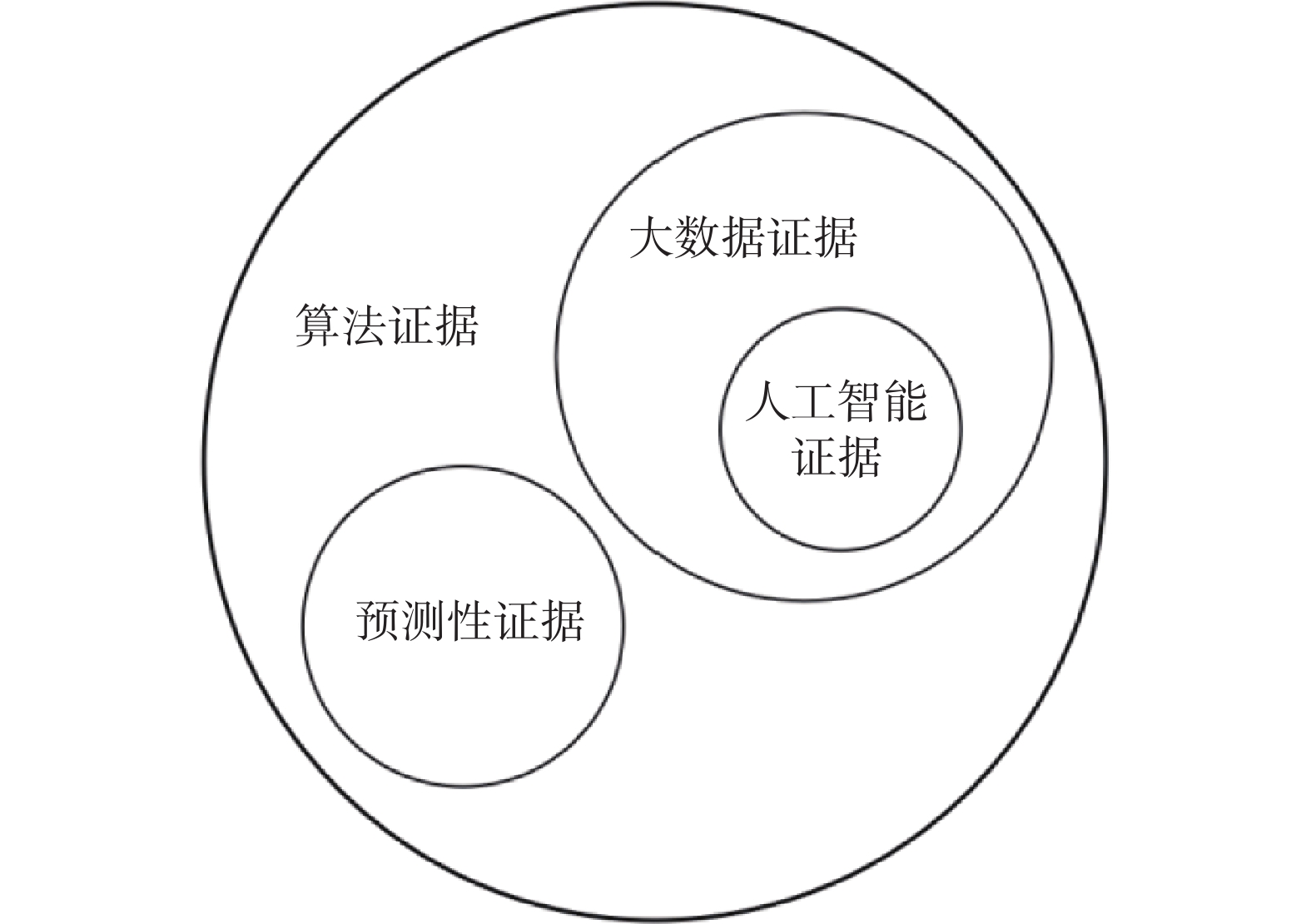
Predictive evidence refers to “algorithmic” similarity evidence that proves facts related to criminal procedure law in the form of algorithmic predictions based on data analysis, algorithmic models, and other technical means. In terms of its probative function and evidentiary characteristics, predictive evidence aligns with similar-fact evidence in traditional criminal proceedings. Although predictive evidence is not a statutorily recognized form of evidence, it can still serve as evidence to prove the facts of a case in certain circumstances. Meanwhile, the application of predictive evidence in criminal proceedings carries risks such as the transmission of cognitive biases, information obscuration, and interference with rights. These risks can easily lead to an imbalance between prosecution and defense in criminal litigation, as well as an imbalance in litigation values, ultimately resulting in the adjudicator making unfair judgments due to incorrect application of evidence. Therefore, it is essential to clarify the fundamental principles applicable to predictive evidence, and to construct operational rules for evidentiary capacity and probative force by combining the traditional rules of similar fact evidence with the characteristics of predictive evidence, in order to promote the standardization of the application of predictive evidence and achieve digital justice.
Sociology
Research on the Construction Process of University Professional Learning Communities from the Perspective of Field Theory
WANG Long
2026, 42(1): 97-105. doi: 10.19979/j.cnki.issn10082689.2024080079
Abstract(13) HTML (5) PDF(0)
Abstract:
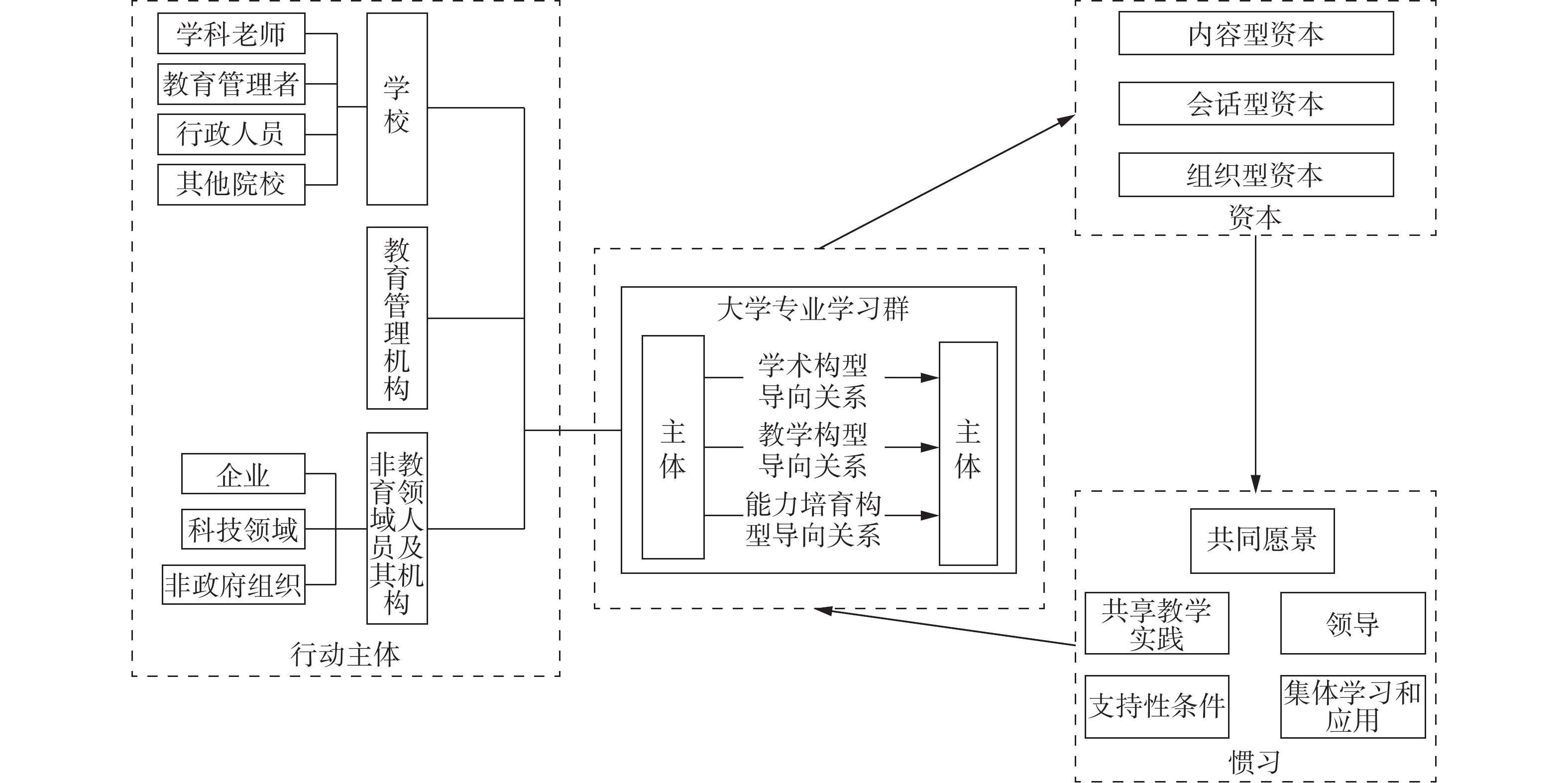
This paper starts from the field theory and delves into the construction process of university professional learning communities based on the analytical framework of “field-capital-habitus”. The study reveals that in a digital environment, the actors within professional learning communities interact through online platforms and tools, forming complex networks of digital community relationships, communication paths, and knowledge-sharing mechanisms. The interaction patterns and functional distribution within the community reflect the allocation of capital and power, with each member playing a specific role within this network of relationships. This digital community structure not only promotes academic exchanges and professional development among community members but also provides impetus and support for educational innovation and reform.
The Situation, Process and Result of the Integration of Resident Village Cadres from the Perspective of “Organization Man”-Based on the Investigation of B Town in T City
HE Licheng
2026, 42(1): 106-116. doi: 10.19979/j.cnki.issn10082689.2024080064
Abstract(18) HTML (6) PDF(2)
Abstract:
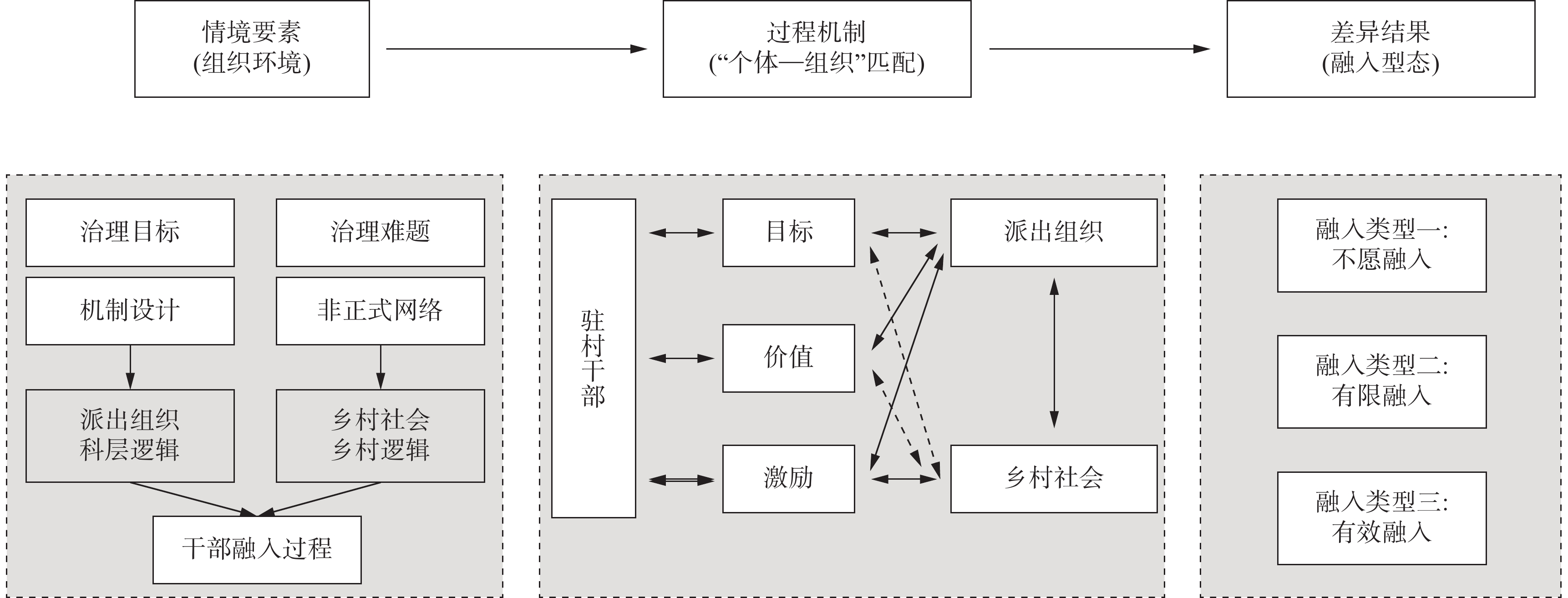
As a key force to help the country realize the strategy of rural revitalization, why do resident village cadres present differences in individual integration in practice? Based on the perspective of “organization man”, the investigation of village cadres in B town of T City shows that village cadres generally face the dual organizational situation of dispatched organization and rural society, and their integration validity comes from the matching process of “individual-organization”. Specifically, the matching degree between the resident village cadres and the dispatched organizations shapes their willingness and ability to integrate, while the matching degree with the rural society directly affects the result of their integration. Based on the analysis framework of “situation-process-result”, the differentiated integration of resident village cadres can be summarized into three types: suspended presence, structural embedment and integrated leadership. Among them, motivation and ability are the core factors that drive the differences in the integration of cadres. To promote the effective integration of resident village cadres, it is necessary to further improve the incentive mechanism, promote accurate empowerment and fully stimulate the endogenous vitality of villages. The analysis of the differences in the integration of cadres provides practical experience for understanding and optimizing the mechanism of cadres’ residence in villages, and has certain enlightening significance for thinking about the relationship between the state and villages under the background of rural revitalization strategy.
Phlisophy
A Study of the Significance of Lukács’ Totality Dialectics-A Discussion of the Influence to the Frankfurt School’s Negative Dialectics Thinking
HU Guoqing
2026, 42(1): 117-125. doi: 10.19979/j.cnki.issn10082689.2025060121
Abstract(11) HTML (9) PDF(0)
Abstract:
Lukács believes that it is necessary to understand Marxist philosophy from a dialectical perspective. However, due to the profound influence of Hegel’s philosophy, he failed to fundamentally understand the ontological principles of human existence in the reality of Marxist dialectics. Lukács’ dialectics focuses on one dimension of methodology. Benefiting from Hegel philosophy, Lukács elevated the banner of dialectics to grasp the universality and truth of Marxist philosophy in a realistic manner. His theory of reification plays a positive role in deepening the understanding of abstract labor, helping to expose the irrationality of capitalist civilization, and became a powerful tool for Western Marxism to critique society. The Frankfurt School's negative dialectics has a dual dimension: on one hand, at the ontological level, it deconstructs totality with non-identity; on the other hand, at the epistemological level, it criticizes capitalist civilization from a non-identical perspective. From the debate between the “identity” and “non-identity” of total dialectics and negative dialectics, it can be seen that the development and ontological limitations of Western Marxist dialectics.
A Community of Life for Man and Nature: A China’s Solution to the “Nature Alienation” in Accelerating Society
SONG Tianguang
2026, 42(1): 126-134. doi: 10.19979/j.cnki.issn10082689.2024100149
Abstract(9) HTML (5) PDF(0)
Abstract:
Acceleration is not only a distinctive feature of modern society, but also an important perspective for understanding ecological crisis. Under the dominance of capital, modern society satisfies its desire for proliferation through acceleration, which makes nature become an object of rational calculation and a tool for value appreciation, losing its original meaning for human subjectivity, that is, nature alienation. The ecological disorder of acceleration and desynchronization is not the inevitable result of natural operation, but stems from the “first driving force” of capital. Capital proliferation contains accelerated demand, constructing an accelerated society through the acceleration of production, circulation, and consumption, which is the underlying logic of social acceleration. Nature is not the object of human fanatical production, conquest, enslavement, and exploitation, but the “inorganic body” for human survival and development. A community of life for man and nature is a China’s solution to the problem of accelerating social “natural alienation”. As a life relationship under the “observation” of socialist production relation, it not only presents the deep driving forces behind social acceleration and desynchronization, but also points out the reasonable pattern of interaction between human and nature, the conscious awareness of interaction between human and nature, and the value foundation of interaction among human. Breaking the accelerated logic of capital domination and building a community of life between human and nature has profound significance in alleviating the current ecological crisis, resolving the contradictions between human and nature, expanding the breadth of human survival in green development, and extending the depth of nature value.