



Artificial Intelligence Automation from the Perspective of New Quality Productive Forces: The Superposition Effect of Dual Productivity and New Economic Growth
-
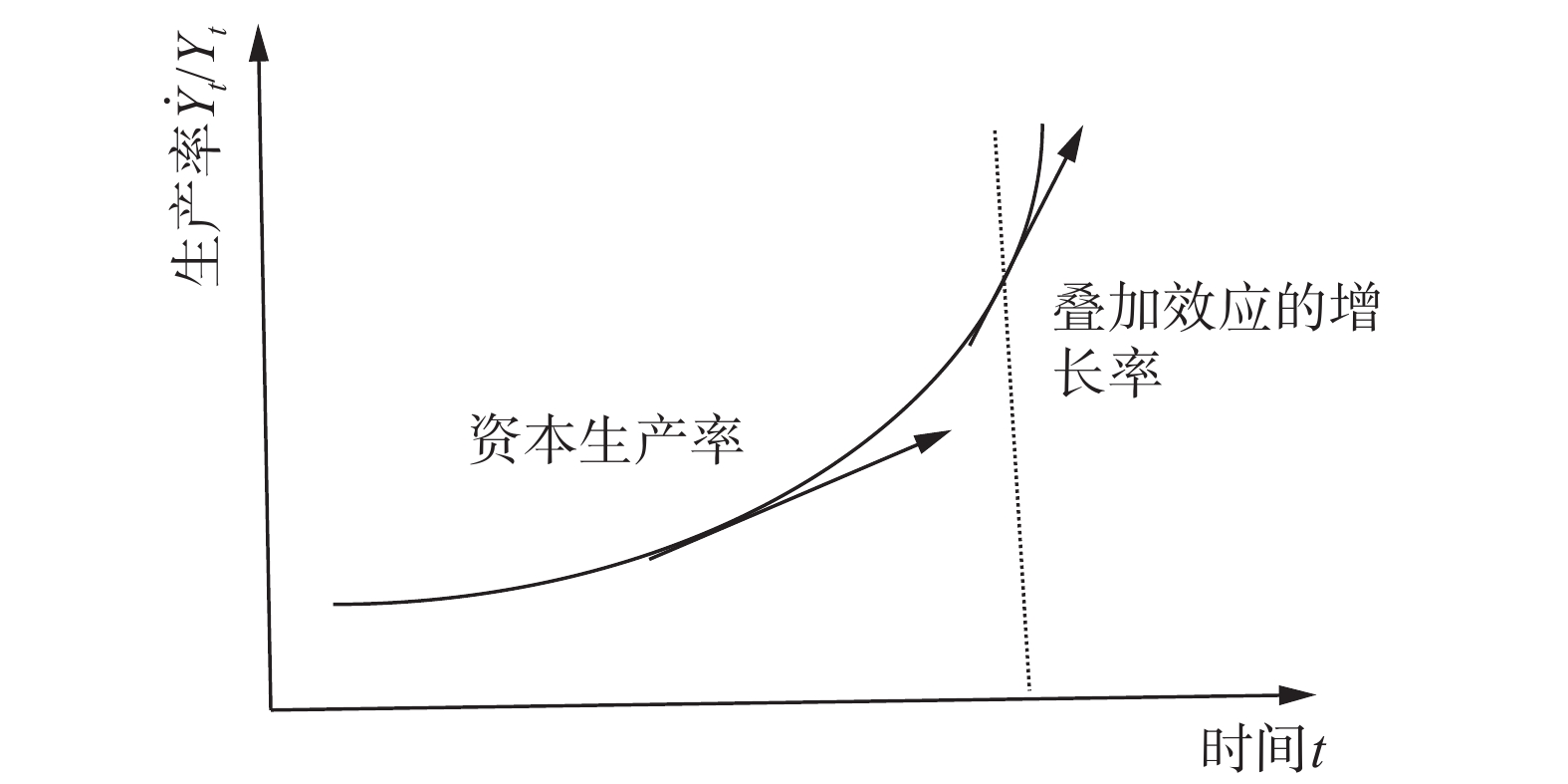
摘要: 文章解释了新质生产力视域下的人工智能自动化概念的内涵、特征和意义。人工智能自动化不同于机械自动化,是组织和行为的自主生成性。其本质特征是自我优化机制、自主组织机理和自动行为机能。人工智能自动化的这些特质和特性,使其产生直接和间接两方面的双重生产力。人工智能自动化的直接生产力与间接生产力复合叠加,产生技术创新增长率大于资本积累增长率效应、资本生产率增长×技术生产率增长叠加效应和经济增长奇点效应。文章通过对新质生产力视域下人工智能自动化的深入分析,目的在于解释人工智能与经济增长的关键问题,研究人工智能自动化是什么特征、特质和特性的生产模型,产生什么样的生产力,如何产生的,有什么意义,为中国人工智能创新与经济发展提供智力支持。Abstract: This paper explains the connotation, characteristics and significance of the concept of artificial intelligence automation from the perspective of new quality productive forces. Artificial intelligence automation is different from mechanical automation; it is the autonomous generation of organization and behavior. Its essential features are self-optimization mechanism, autonomous organization mechanism, and automatic behavior function. These traits and characteristics of artificial intelligence automation enable it to produce dual productivity in both direct and indirect aspects. The direct productivity and indirect productivity of artificial intelligence automation are compounded, generating effects such as a technology innovation growth rate exceeding the capital accumulation growth rate, the superimposed effect of capital productivity growth × technological productivity growth, and the economic growth singularity effect. Through an in-depth analysis of artificial intelligence automation from the perspective of new quality productive forces, this article aims to explain the key issues between artificial intelligence and economic growth, study the production model of artificial intelligence automation in terms of its characteristics, qualities, and traits, the type of productivity it generates, how it is generated, and its significance, providing intellectual support for China’s artificial intelligence innovation and economic development.
-
[1] SHI W, LI J, CHEN Z, et al. Smart mine: The role of artificial intelligence in modern coal extraction [C]// 2024 IEEE/WIC International Conference on Web Intelligence and Intelligent Agent Technology (WI-IAT). Bangkok: IEEE, 2024: 874-879. [2] JAVAID M, HALEEM A, KHAN I H, et al. Understanding the potential applications of artificial intelligence in agriculture sector [J]. Advanced Agrochem, 2023, 2(1): 15-30. doi: 10.1016/j.aac.2022.10.001 [3] AUTOR D H, LEVY F & MURNANE R J. The skill content of recent technological change an empirical investigation [J]. Quarterly Journal of Economics, 2003, 118(4): 1279-1333. [4] GOTTINGER H W. Artificial intelligence and economic modelling [J]. Expert Systems, 1991, 8(2): 99-105. doi: 10.1111/j.1468-0394.1991.tb00257.x [5] AGHION P, JONES B F & JONES C I. Artificial intelligence and economic growth [R/OL]. National Bureau of Economic Research (2017-09-17)[2025-07-16]. http://papers.ssrn.com/sol3/papers.cfm?abstract_id=3053718. [6] EKBIA H R. Fifty years of research in artificial intelligence [J]. Annual Review of Information Science and Technology, 2010, 44(1): 201-242. doi: 10.1002/aris.2010.1440440112 [7] ACEMOGLU D & RESTREPO P. Automation and new tasks: How technology displaces and reinstates labor [J]. Journal of Economic Perspectives, 2019, 33(2): 3-30. [8] PATEL K, BEERAM D, RAMAMURTHY P, et al. Ai-enhanced design: Revolutionizing methodologies and workflows [J]. International Journal of Artificial Intelligence Research and Development, 2024, 2(1): 135-157. [9] AGRAWAL A, MCHALE J & OETTL A. Finding needles in haystacks: Artificial intelligence and recombinant growth [C]//The Economics of Artificial Intelligence: An Agenda. Cambridge, MA: National Bureau of Economic Research, 2018: 149-174. [10] DECANIO S J. Robots and humans: Complements or substitutes? [J]. Journal of Macroeconomics, 2016, 49(1): 280-291. [11] 陈琳, 高悦蓬, 余林徽. 人工智能如何改变企业对劳动力的需求?——来自招聘平台大数据的分析[J]. 社会科学文摘, 2024(9): 82-84. [12] HUI X, RESHEF O & ZHOU L. The short-term effects of generative artificial intelligence on employment: Evidence from an online labor market [J]. Organization Science, 2024, 35(6): 1977-1989. [13] SACHS J D & KOTLIKOFF L J. Smart machines and long-term misery [R/OL]. (2012-12-01)[2024-12-03]. https://www.nber.org/papers/w18629. [14] AGRAWAL A, GANS J & GOLDFARB A. The simple economics of machine intelligence [J]. Harvard Business Review, 2016, 17(1): 2-5. [15] DIMA J, GILBERT M H, DEXTRAS-GAUTHIER J, et al. The effects of artificial intelligence on human resource activities and the roles of the human resource triad: Opportunities and Challenges[J/OL]. (2024-06-03)[2024-12-03]. https://www.frontiersin.org/journals/psychology/articles/10.3389/fpsyg.2024.1360401/full. [16] 杨善林, 李霄剑, 张强, 等. 人工智能与管理变革[J]. 中国管理科学, 2023, 31(6): 1-11. doi: 10.3969/j.issn.1006-9860.2025.11.028 [17] CREMER D D, BIANZINO N M & FALK B. How generative ai could disrupt creative work [J]. Harvard Business Review, 2023, 13: 1-12. [18] JONES B F & LIU X. A framework for economic growth with capital-embodied technical change [J]. American Economic Review, 2024, 114(5): 1448-1487. doi: 10.1257/aer.20221180 [19] 胡乐明, 杨虎涛. 产业发展战略选择的内在逻辑——一个连接演进的解析框架[J]. 经济研究, 2022, 57(6): 45-63. [20] CHANG Y T & FAN N H. A novel approach to market segmentation selection using artificial intelligence techniques [J]. The Journal of Supercomputing, 2023, 79(2): 1235-1262. doi: 10.1007/s11227-022-04666-2 [21] CALVANO E, CALZOLARI G, DENICOLÒ V, et al. Artificial intelligence, algorithmic pricing, and collusion [J]. American Economic Review, 2020, 110(10): 3267-3297. [22] 戴军, 窦一凡, 黄丽华, 等. 智能系统软件的定价模式: 数据驱动升级视角[J]. 管理科学学报, 2022, 25(9): 1-14. doi: 10.19920/j.cnki.jmsc.2022.09.001 [23] HANSEN K T, MISRA K & PAI M M. Frontiers: Algorithmic collusion: Supra-competitive prices via independent algorithms [J]. Marketing Science, 2021, 40(1): 1-12. [24] JOHNSON J P, RHODES A & WILDENBEEST M. Platform design when sellers use pricing algorithms [J]. Econometrica, 2023, 91(5): 1841-1879. doi: 10.3982/ECTA19978 [25] 张永林. 智能创新生产力理论与中国经济发展深层思考[J]. 管理科学学报, 2017, 20(10): 116-126. doi: 10.3969/j.issn.1007-9807.2017.10.009 [26] ABBASI A, PARSONS J, PANT G, et al. Pathways for design research on artificial intelligence [J]. Information Systems Research, 2024, 35(2): 441-459. doi: 10.1287/isre.2024.editorial.v35.n2 [27] 张永林. 互联网、信息元与屏幕化市场——现代网络经济理论模型和应用[J]. 经济研究, 2016, 51(9): 147-161. [28] BLUME L, EASLEY D, KLEINBERG J, et al. Introduction to computer science and economic theory [J]. Journal of Economic Theory, 2015, 156: 1-13. doi: 10.1016/j.jet.2014.11.002 [29] 江小涓, 宫建霞, 李秋甫. 数据、数据关系与数字时代的创新范式[J]. 社会科学文摘, 2024(12): 81-83. [30] GRAETZ G & MICHAELS G. Robots at work [J]. Review of Economics and Statistics, 2018, 100(5): 753-768. doi: 10.1162/rest_a_00754 [31] JONES K S. The role of artificial intelligence in information retrieval [J]. Journal of the American Society for Information Science, 1991, 42(8): 558-565. doi: 10.1002/(SICI)1097-4571(199109)42:8<558::AID-ASI4>3.0.CO;2-4 [32] LUDWIG J & MULLAINATHAN S. Machine learning as a tool for hypothesis generation [J]. The Quarterly Journal of Economics, 2024, 139(2): 751-827. doi: 10.1093/qje/qjad055 [33] RESTREPO P. Automation: Theory, evidence, and outlook [J]. Annual Review of Economics, 2024, 16(1): 1-25. [34] RIBEIRO J, LIMA R, ECKHARDT T, et al. Robotic process automation and artificial intelligence in industry 4.0—a literature review [J]. Procedia Computer Science, 2021, 181: 51-58. [35] VERMA S, SHARMA R, DEB S, et al. Artificial intelligence in marketing: Systematic review and future research direction [J]. International Journal of Information Management Data Insights, 2021, 1(1): 100002. [36] NORDHAUS W D. Are we approaching an economic singularity? Information technology and the future of economic growth [J]. American Economic Journal: Macroeconomics, 2021, 13(1): 299-332. doi: 10.3386/w21547 [37] ABRARDI L, CAMBINI C & RONDI L. The economics of artificial intelligence: A survey [R]. Florence: Robert Schuman Centre for Advanced Studies, 2019. [38] JUMPER J, EVANS R, PRITZEL A, et al. Highly accurate protein structure prediction with alphafold [J]. Nature, 2021, 596(7873): 583-589. doi: 10.1038/s41586-021-03819-2 -

 下载:
下载:
 点击查看大图
图(4)
计量
- 文章访问数: 292
- HTML全文浏览量: 141
- PDF下载量: 6
- 被引次数: 0
